Portfolio
David Immanuela





Back to Home
Designing a State-Owned Company’s Internal App
Portaverse First Product
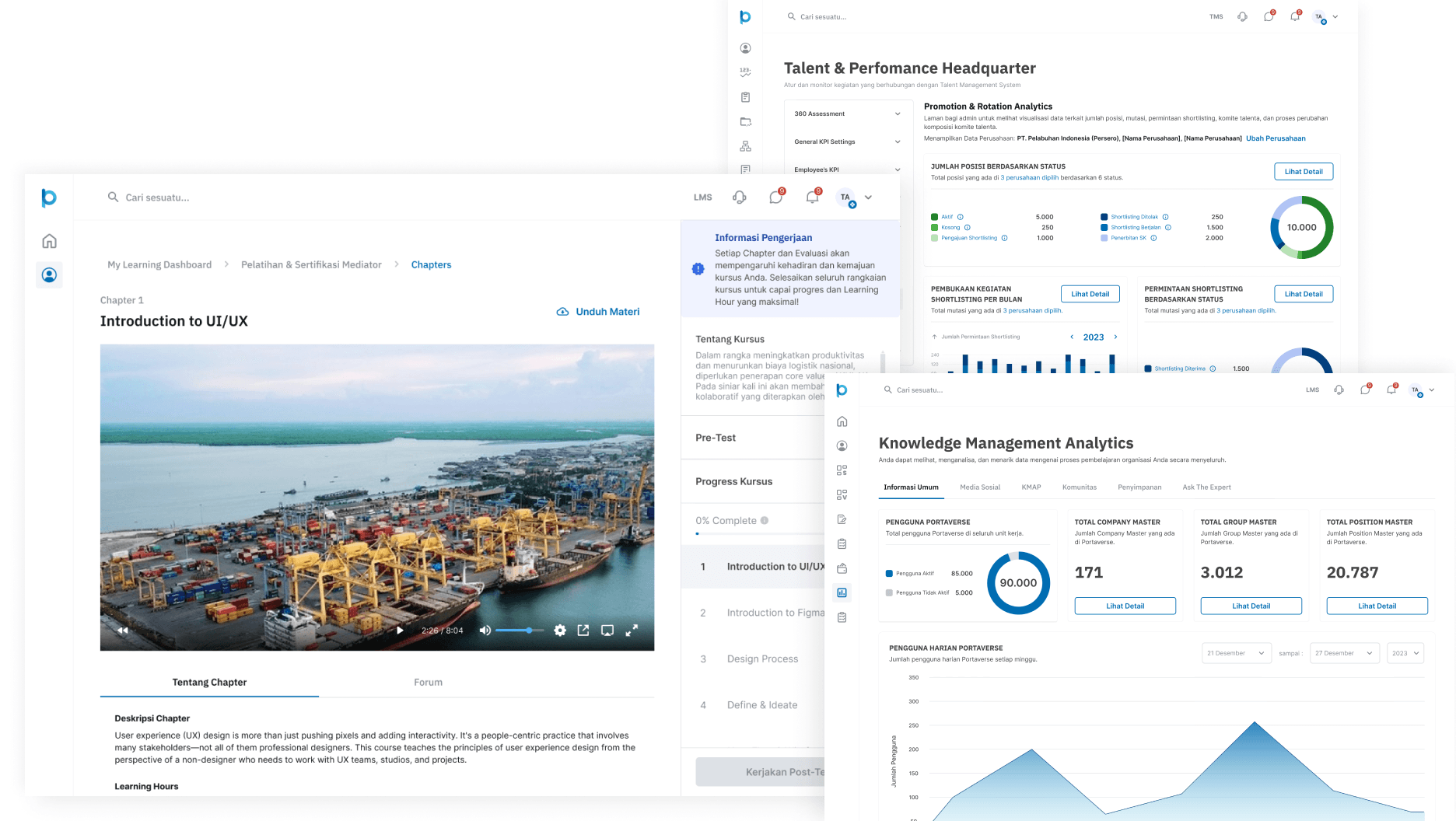
I contributed to the development of three major platforms: Knowledge Management System (KMS), Learning Management System (LMS), and Talent Management System (TMS). These platforms are accessible both through web browsers and mobile applications.

CLIENT
PT Pelabuhan Indonesia

TIMELINE
2022 - Present

PLATFORM
Web App & Mobile App
KMPlus developed Portaverse, a multi-faceted internal application for Pelindo. Initially conceived as a Knowledge Management System (KMS), Portaverse has evolved to include a Learning Management System (LMS) for employee development and a Talent Management System (TMS) for performance evaluation.
Portaverse is a strategic initiative for Pelindo, supporting three key employee development objectives:
Integrated learning and development program to standardize and improve the quality of human resources
Centralized repository of company knowledge
Integrated system for performance evaluation
We remain committed to the ongoing development of Portaverse to ensure its alignment with Pelindo's evolving business requirements. As a UI/UX designer, I have been involved in the project since its inception. My primary duties and responsibilities were:
Partnering with the product manager to shape product features
Partnering with developers to refine designs for implementation
Sharing ideas with the design team
Evaluating the implementation of design solutions
Continuously improving designs based on user feedback and testing
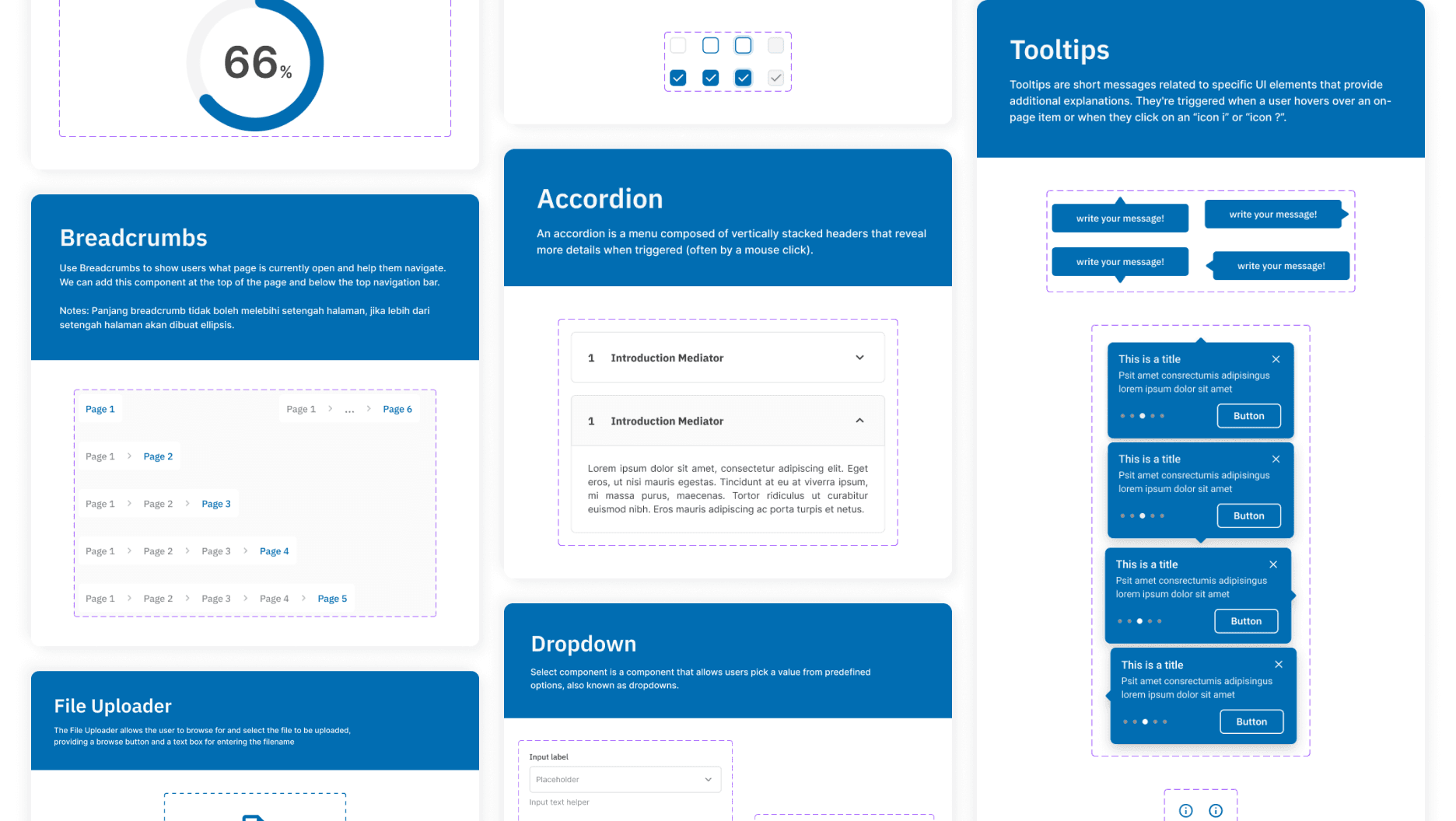
Driving the creation of the initial design system → link ke case study design system
Workflow
We use an agile approach for continuous improvement and adaptability.
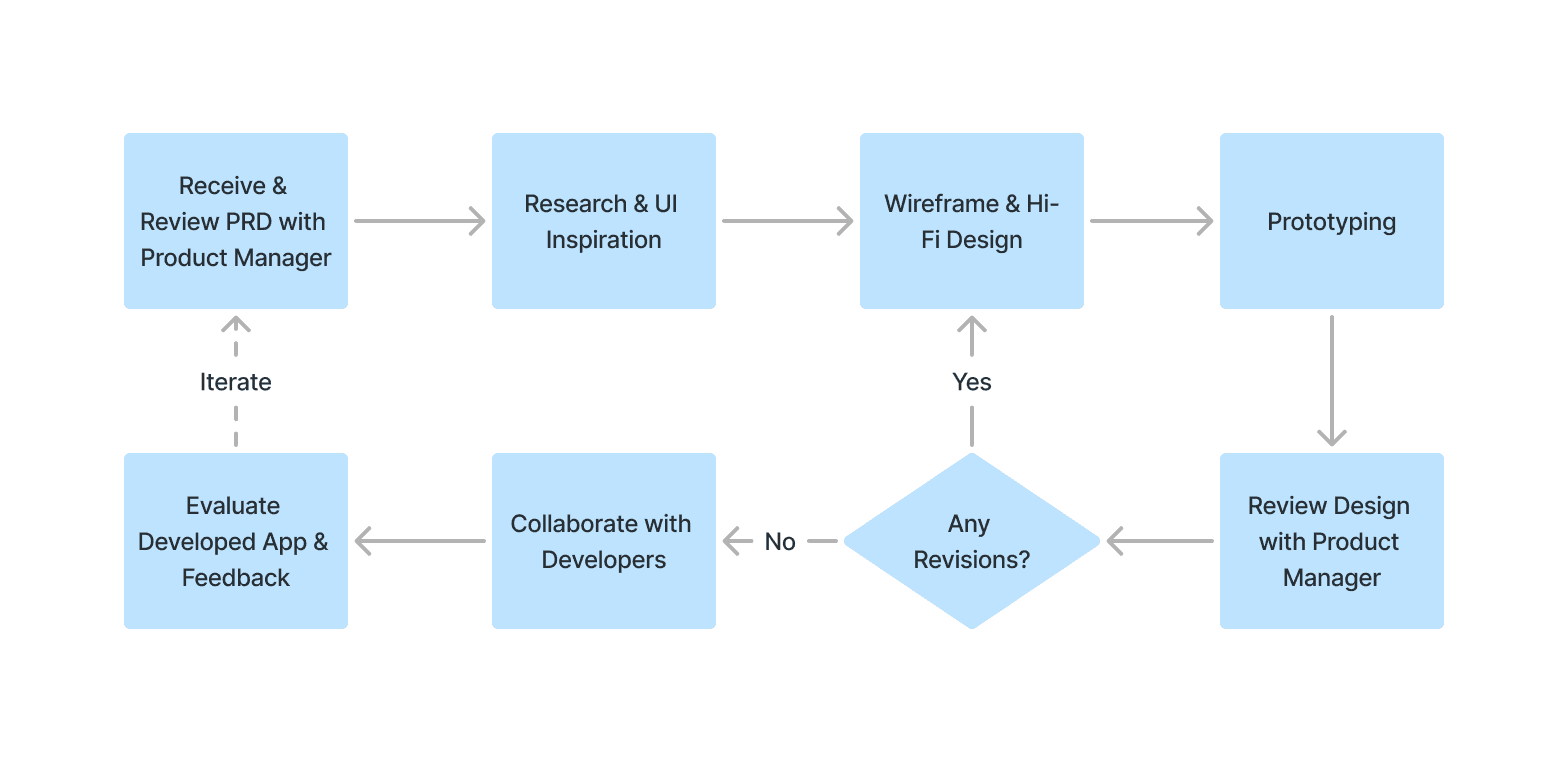
UI UX designer workflow
My two-year journey developing Portaverse presented various challenges and valuable lessons.
Challenge #1 - Lack of documented requirements
In my first six months, product requirements were communicated verbally during meetings. We as designers documented these requirements based on the PM's descriptions and suggestions.
Initially, frequent design changes hindered the process. I addressed this by reconfirming requirements and sharing meeting notes. In 2023, we adopted Notion as our primary tool for documenting product requirements. The product manager began inputting requirements directly into Notion, and I actively contributed by adding additional details and context.
Additionally, I took the initiative to maintain a detailed change log for all Portaverse features that I worked on.
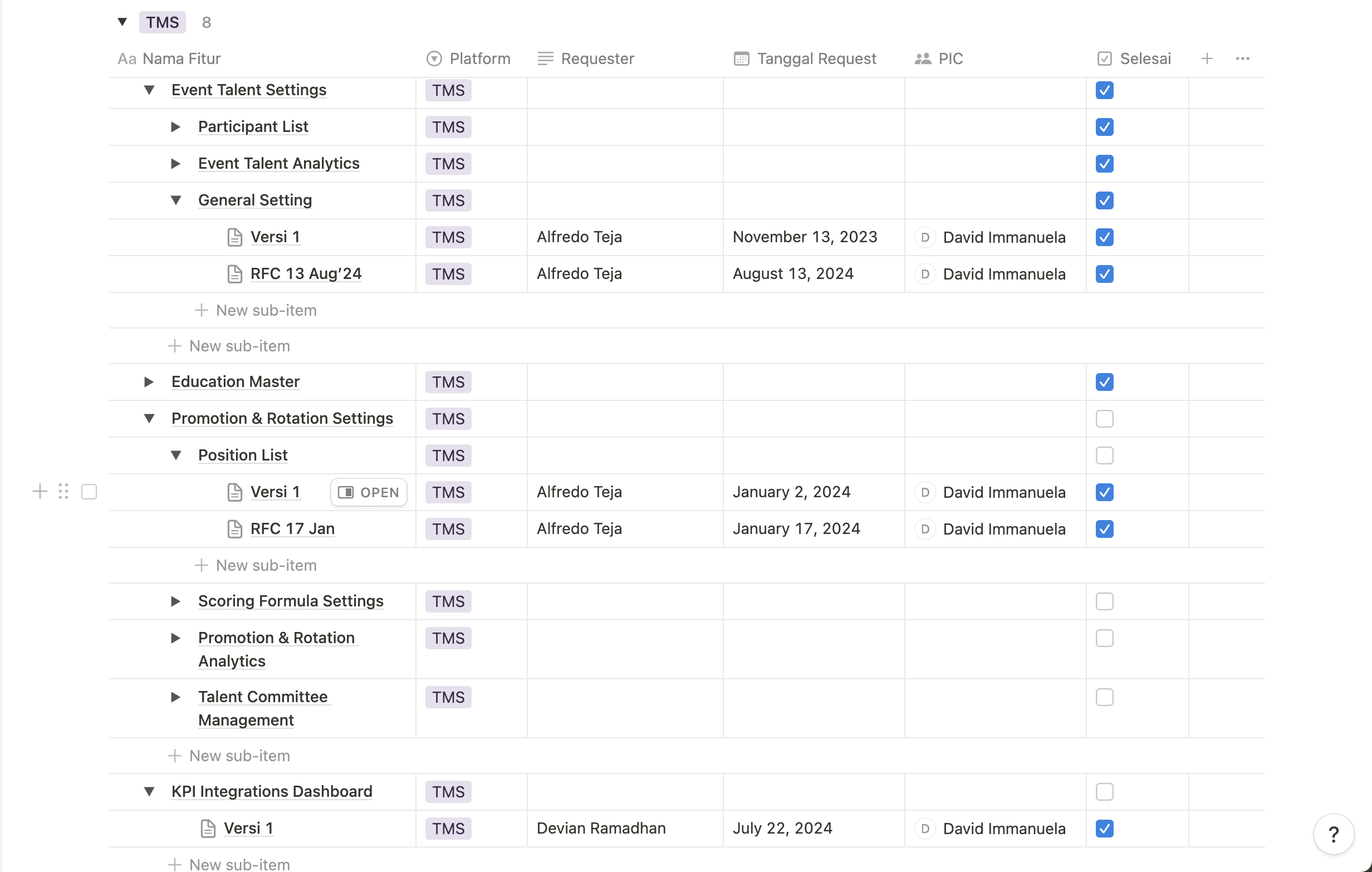
Change log documentation
By having clear and concise documentation, we were able to reduce the frequency of design revisions and improve communication between the product manager, designers, and developers.
Challenge #2 - No senior-level guidance
When I first joined the UI/UX Design team, two of my colleagues had one year of professional experience. Even with minimal experience, both of my colleagues are very competent and helping me tune in to the team.
There are times when there are several business problems that are quite challenging to translate into tangible design solutions. I am happy that my colleagues (both fellow designers and the PM team) always give me the opportunity to convey ideas.
However, as time went by, I felt the need to have a senior who could provide perspective and a variety of creative solutions to help me develop.
I have actively sought external references to improve my design skills. Unconsciously, I became increasingly attuned to user experiences. For example, when ordering food online, I analyzed how Grab and Gojek let me find food, how they organize the food categories, and compare their interfaces.
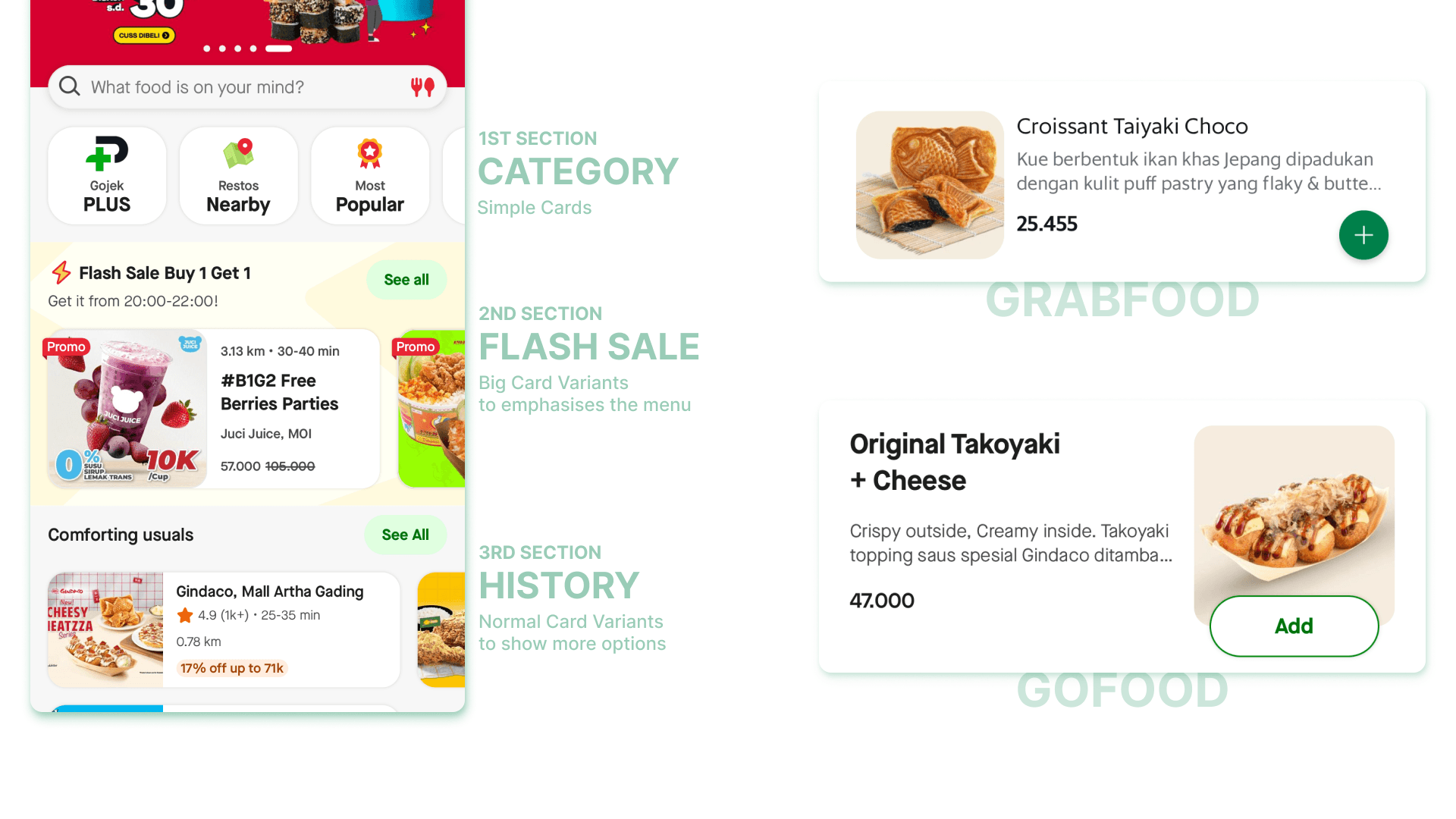
App review
I also drew inspiration from design studios like Fikri Studio. While their platform designs might differ from my specific needs, I gained valuable insights from their component design approaches. For instance, I learned how to break down complex forms into smaller, more manageable sections to enhance the user experience.
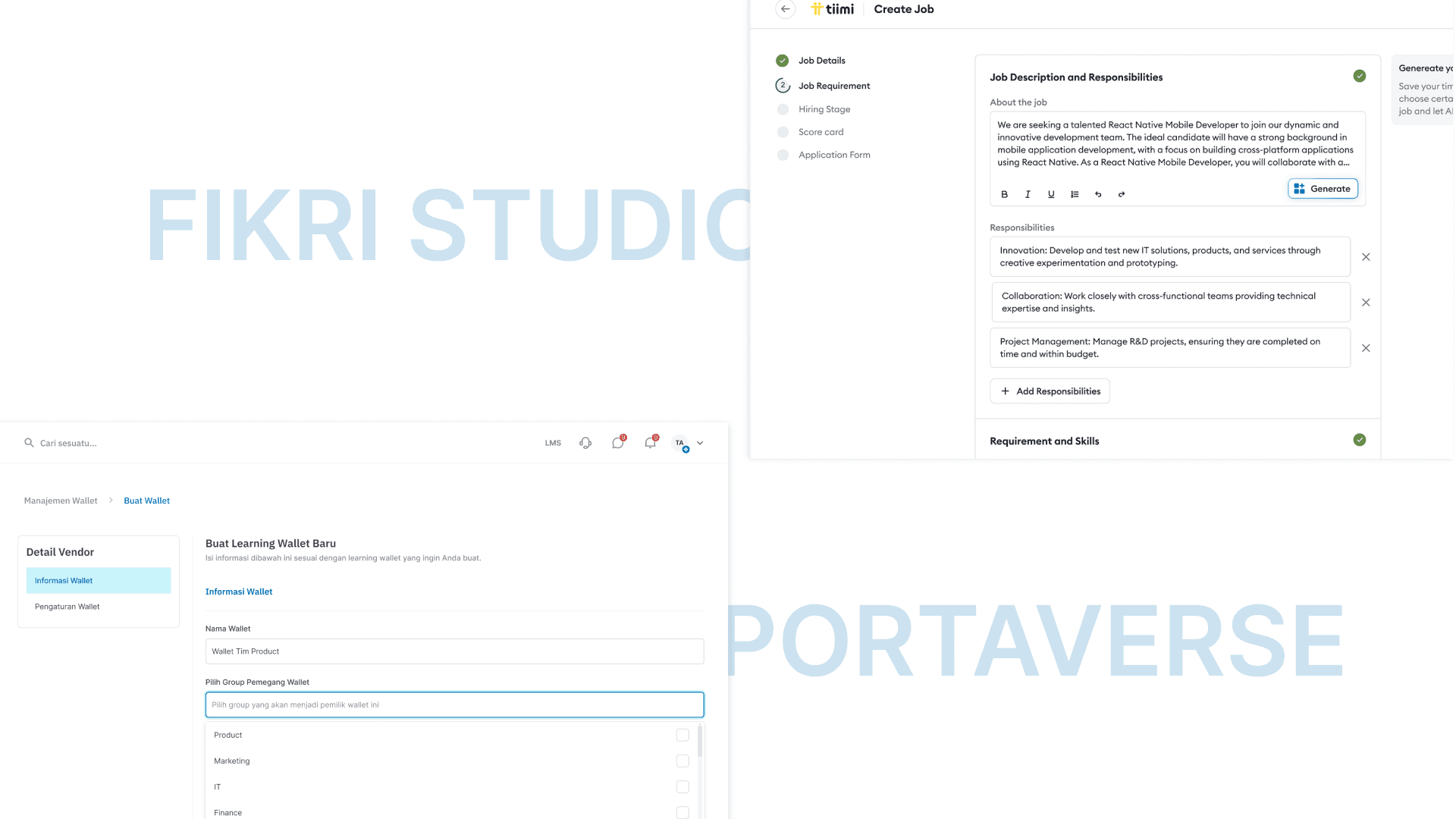
Generate ideas from references
In the future, I aim to learn from experienced designers through mentorship like ADPList and community engagement.
Portaverse Design
I've been involved in the design of all three core platforms of Portaverse: KMS, LMS, TMS. This includes both desktop and mobile interfaces.
Knowledge Management System (KMS)
KMS is a comprehensive platform designed to facilitate knowledge sharing, collaboration, and community building within the company. Key features include interactive Knowledge Maps, social media tools, a community forum, an expert Q&A section, and advanced analytics to measure knowledge impact.
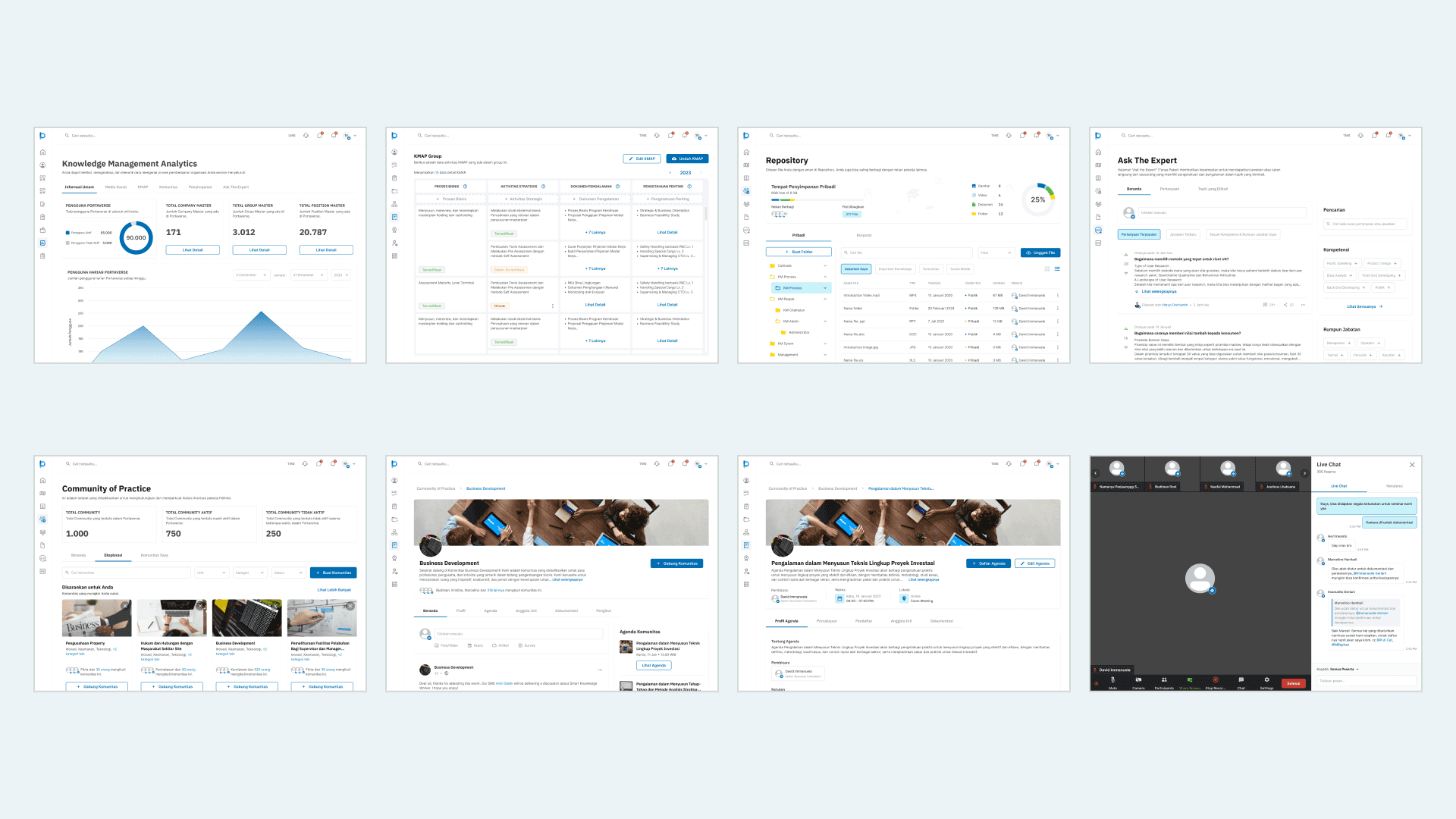
KMS design frames
Learning Management System (LMS)
LMS is a platform for employee learning and development, linked to performance metrics in TMS. Key features include course exploration, self-paced learning, and advanced analytics to track learning progress and its impact on employee performance.
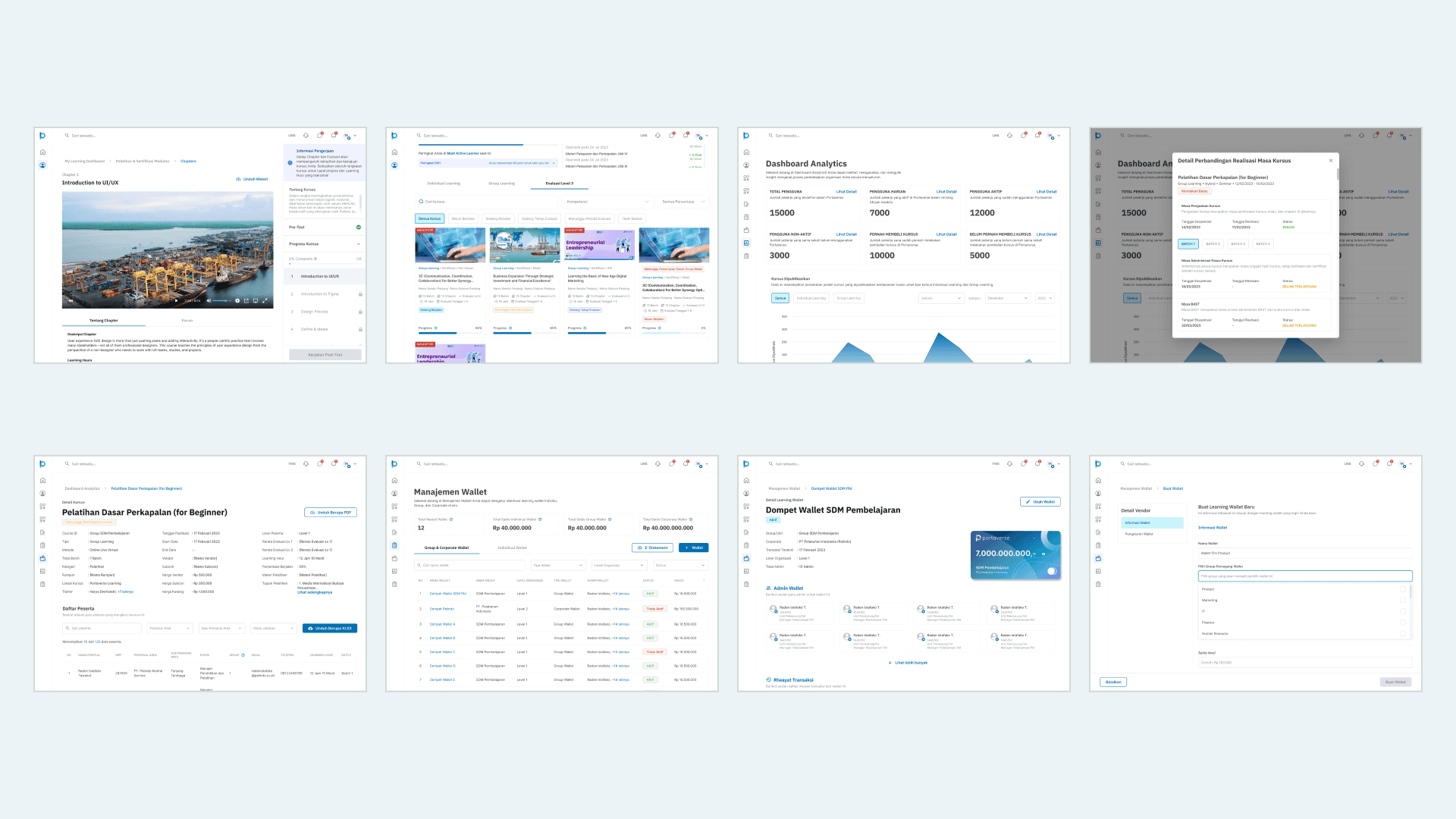
LMS design frames
Talent Management System (TMS)
TMS is a comprehensive platform designed to manage employee performance, development, and career aspirations. It empowers administrators to monitor employee performance, supervisors to manage their teams, and employees to manage their profiles and career goals.
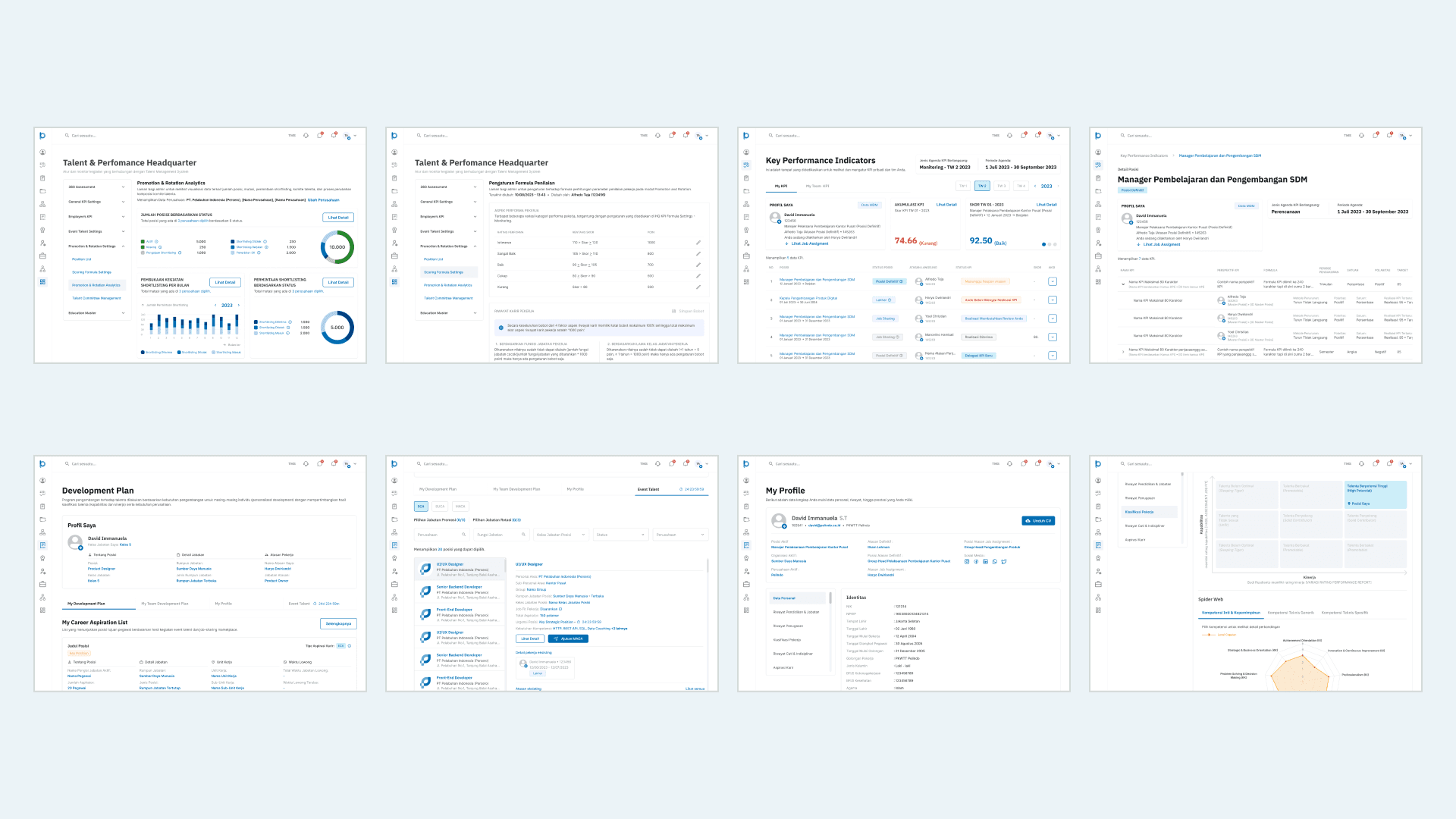
TMS design frames
Challenge #3 - Optimizing Flow for mobile devices
In addition to the desktop application, we developed a mobile version of Portaverse to enhance accessibility. We prioritized the development of the desktop version, followed by the mobile version. I also contributed to the design and development of the mobile application.
Adapting desktop designs to mobile screens is challenging due to space constraints. To address this challenge, I researched mobile app design patterns, both through direct downloads and screenshots from platforms like Mobbin and Chamjo.
I also collaborated with the PM to prioritize features and ensure a smooth and efficient user experience within the constraints of the smaller screen.
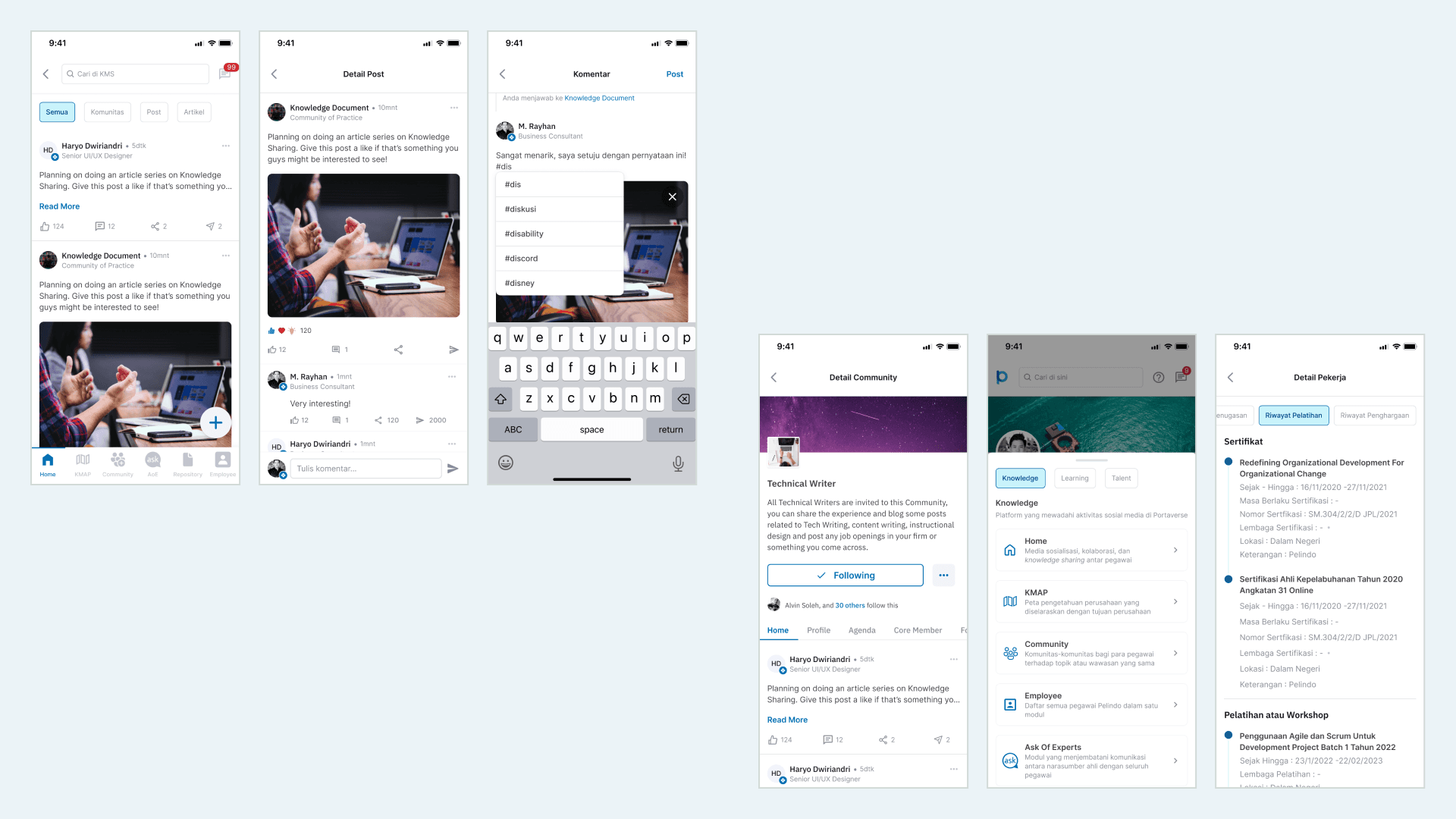
KMS mobile frames
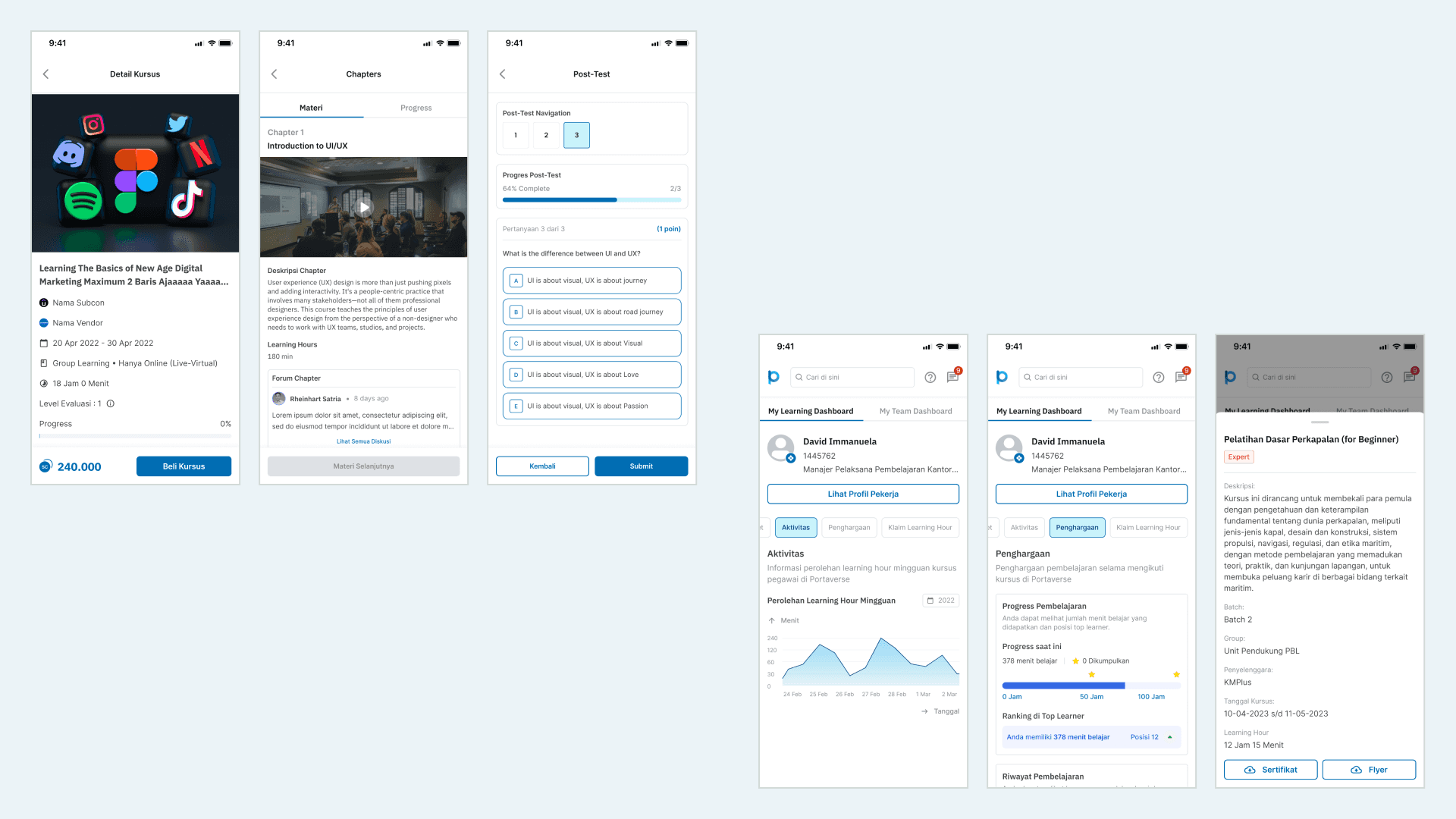
LMS mobile frames
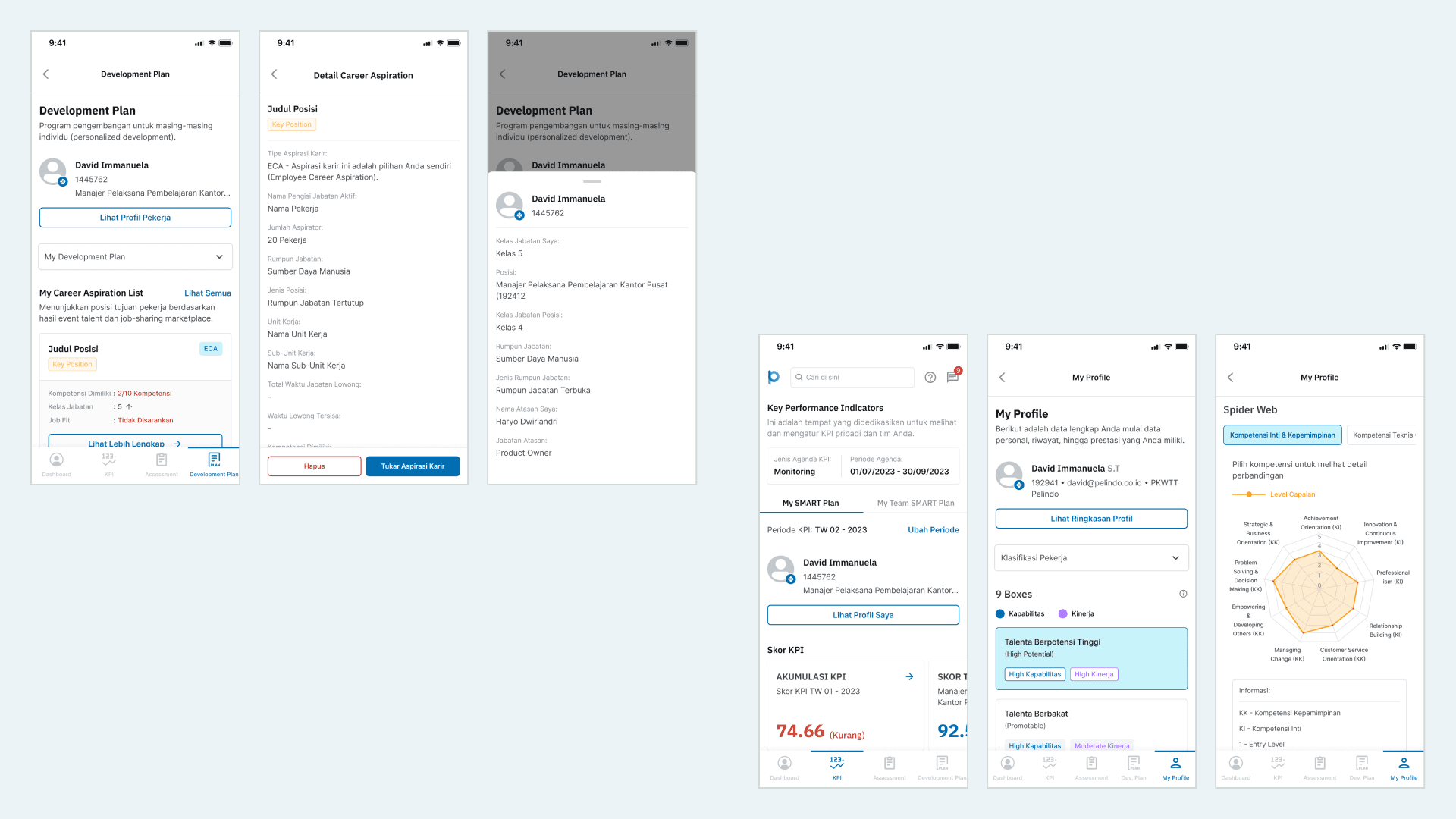
TMS mobile frames
Results
User feedback guides Portaverse's development. We collaborated with Pelindo's internal team to gather user insights.
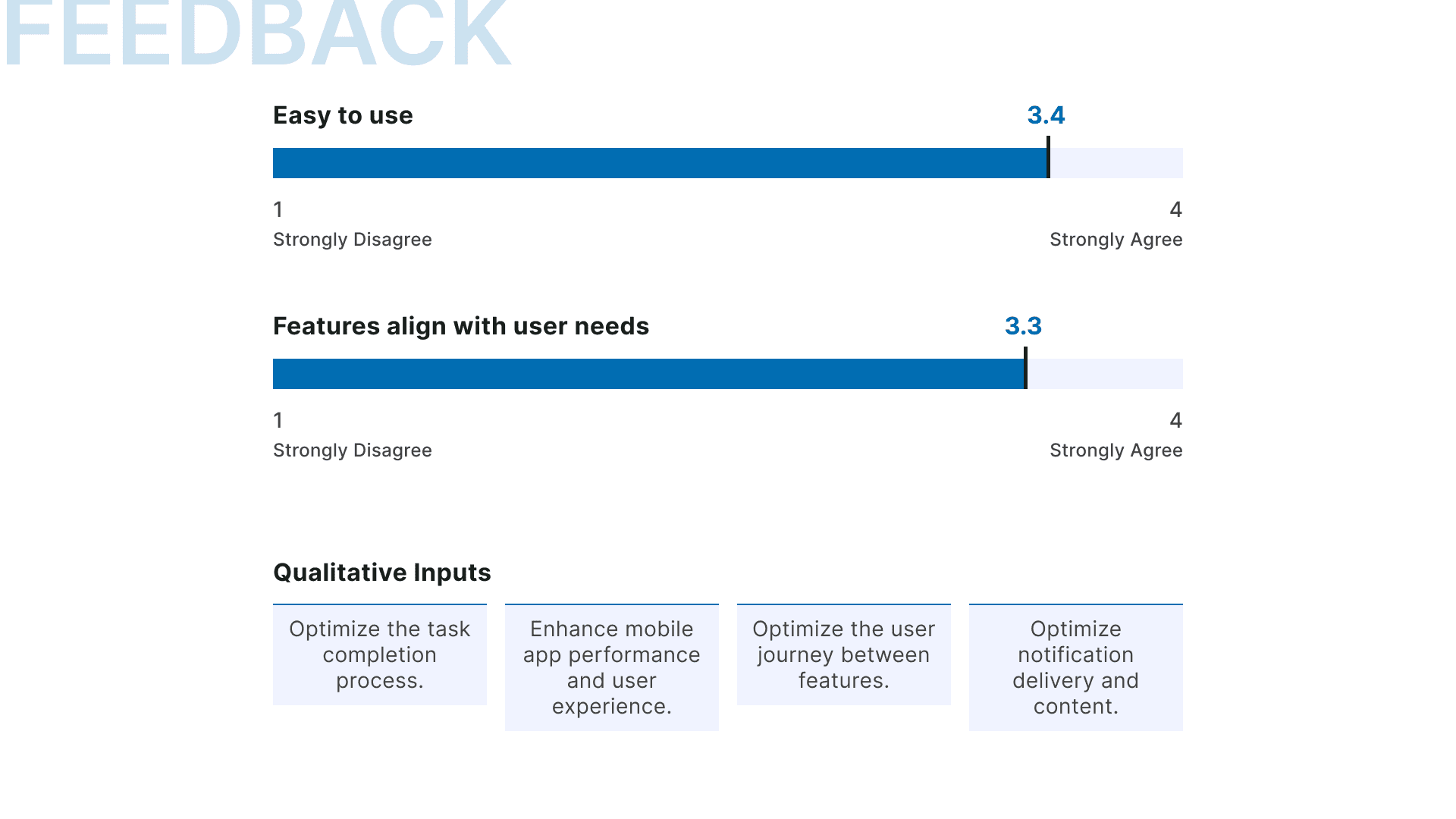
User feedback
While the survey results indicate a generally positive user experience, there's room for improvement. To achieve this, I have a plan to conduct regular design reviews of existing features to identify areas for improvement and implement iterative refinements.
Reflection
I gained valuable experience in adapting to unstructured workflows and advocated for improved documentation practices.
My initial anxiety about needing a mentor led me to explore alternative learning avenues. I realized that valuable insights could be gained from various sources, including everyday applications.
I've learned that user needs are constantly evolving, and there's always potential for improvement. I'm eager to continue improving the user experience.
© 2024 by David Immanuela